
)
22 – 26 June 2026
Dmytro Savchuk (University of South Florida) gives an online mini-course on self-similar groups. The course is intended for undergraduate or graduate students with a basic background in group theory, as well as for anyone interested in related topics. The course is mostly self-contained. Lectures are given in English.
The main purpose of the mini-course is to introduce the class of self-similar groups (or groups generated by automata) and to survey their applications. These groups were formally introduced in the beginning of 1960’s, but it took a while to realize their importance, utility, and, at the same time, complexity. The first understanding of importance of this class came in the 1980’s with the discovery of the Grigorchuk group, that served as the simplest example of a Burnside group (infinite finitely generated periodic group) and as the first example of a group of intermediate growth. Many other examples followed soon after providing counterexamples to several other long-standing conjectures. Later, it became clear that this class of groups had connections to other areas of mathematics, such as holomorphic dynamics, combinatorics, analysis on graphs, computer science, cryptography, p-adic analysis and dynamics, and other fields.
The mini-course contains a gentle introduction of the main notions and terminology with some basic examples of computations, a discussion of contraction property that is an important feature of many examples, and some applications of self-similar groups to combinatorics and group-based cryptography.
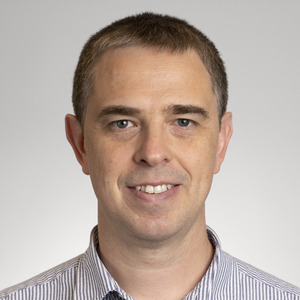
Dmytro Savchuk is a Professor in the Department of Mathematics and Statistics at the University of South Florida. He obtained his undergraduate and Master’s degrees from Taras Shevchenko National University of Kyiv and earned his PhD in Mathematics from Texas A&M University (USA). Prof. Savchuk’s research focuses on geometric and combinatorial group theory, algorithmic aspects of self-similar groups, group-based cryptography, p-adic dynamics, and formal languages.
Teaching assistant: Neelam (University of Utah)
Grader: Dmytro Pukhalskyi (Taras Shevchenko National University of Kyiv)
Online
Artem Dudko (Institute of Mathematics of Polish Academy of Sciences)
Oleksiy Klurman (University of Bristol)
Oleksandr Tsymbaliuk (Purdue University)